Quick answer
A wooden centrepiece tray (centerpiece tray) gathers candles, greenery and decor in the middle of a dining table so the arrangement looks deliberate and moves in one piece when you need the space. Size it to the table: leave room for place settings and serving dishes, and keep the whole arrangement low enough that people can see each other across it. Long rectangular trays and dough bowls suit rectangular tables; round trays suit round ones.
Measuring the table footprint
- Measure the table's width and length.
- Subtract the depth of two place settings (plate, glass, cutlery) from the width; that is the strip left for the centerpiece.
- Leave a few inches either side of the tray for passing dishes.
- For length, many hosts keep the centerpiece to roughly a third to a half of the table length, or run a long tray down the middle with breaks for serving dishes.
- On round tables, keep the tray to about a third of the diameter as a starting point.
Sight-line height
The most common centerpiece mistake is height. Seated eye level across a table is low, so a tall arrangement blocks conversation. A practical approach is to keep the arrangement below seated chin height, or use slim, tall elements (taper candles, single stems) that people can see around. Check by sitting down at the table before dinner.
Wooden centrepiece tray: what to check before buying
Seven checks
- Length and width against your table measurements.
- Tray height plus the tallest items you plan to use.
- Shape: long rectangle, dough bowl, round or oval.
- Finish: decor finishes are fine; protect from wax and water.
- Feet or pads to protect the table.
- Handles for moving it off the table quickly.
- Weight when filled.
Styling wood trays for the table
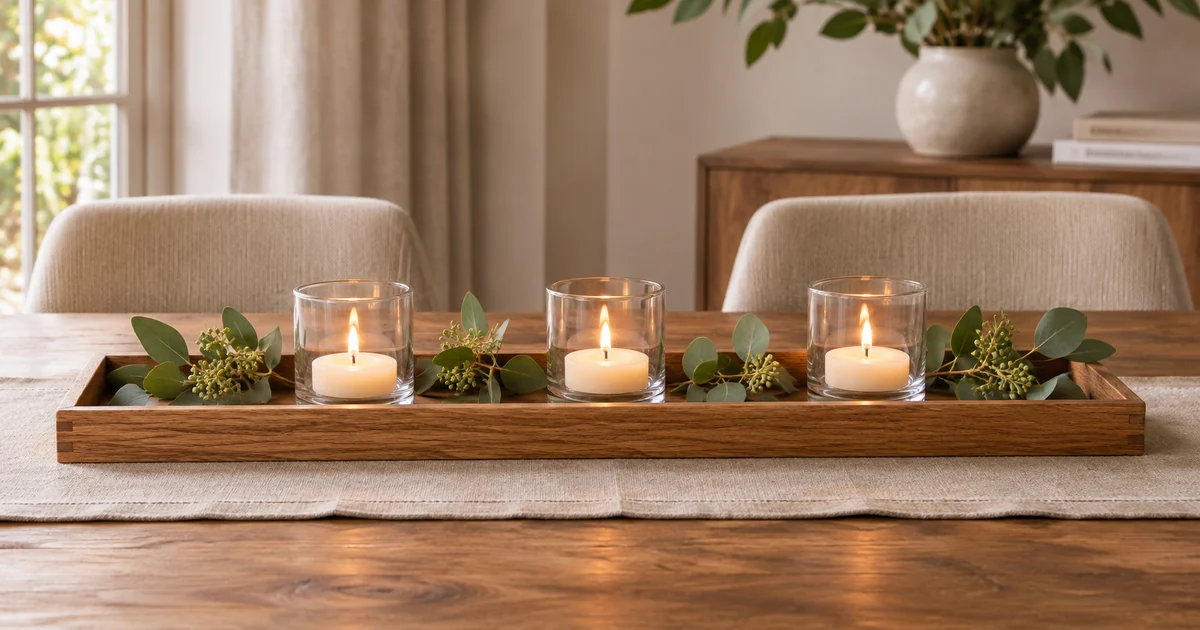
- Everyday: a long tray with a row of three pillar candles in glass and a small plant.
- Seasonal: greenery, pine cones or small pumpkins along the tray with low candles.
- Dinner party: taper candles in holders and bud vases, low and spaced.
- Brunch: a centerpiece tray that doubles as a station for jam, butter and honey in small dishes.
A styling wood tray works best with a few repeated elements rather than many different objects.
Shapes compared
| Shape | Best for | Note |
|---|---|---|
| Long rectangular tray | Rectangular tables | Easy to style in a row |
| Dough bowl | Rustic and farmhouse tables | Deep; good for greenery and candles |
| Round tray | Round tables | Keep to about a third of the diameter |
| Oval tray | Oval tables | Softer look than a rectangle |
| Tiered tray | Buffets, islands | Too tall for most dining tables |
Candles and wax
Use candles in glass holders or on candle plates, never directly on the wood. Wax drips and heat mark finishes, and an open flame near dry greenery is a fire risk. Battery candles avoid both problems. Never leave lit candles unattended.
Researched selection
Our recommended products are near the top of this guide. These Amazon searches help you compare more options.
Browse on Amazon
- Long dough bowlsCheck length against your table.
- Long rectangular centerpiece traysCheck width and height.
These are Amazon search links, not endorsements of every result. Use the checks on this page to filter them.
Care
- Dust regularly; wipe with a barely damp cloth.
- Use saucers under plants and holders under candles.
- Scrape wax gently with a plastic card after it hardens.
- Keep away from heat and direct sun.
Centrepiece tray sizes by table
| Table | Typical size | Tray suggestion |
|---|---|---|
| Small round, 36 to 42 in | Seats 4 | Round tray about 12 to 14 in |
| Round, 48 in | Seats 4 to 6 | Round tray about 16 in |
| Rectangular, 60 in long | Seats 6 | Long tray about 20 to 30 in |
| Rectangular, 72 to 84 in | Seats 6 to 8 | Long tray or dough bowl about 30 to 40 in |
| Rectangular, 96 in and up | Seats 8 to 10 | Two trays or a long runner of trays |
Everyday versus party centerpieces
An everyday centerpiece has to survive meals, so keep it simple: a tray with a candle, a small plant and perhaps a bowl of fruit on a liner, all easy to lift off when the table is needed. A party centerpiece can be more elaborate, but it should still leave room for serving dishes. A practical approach is to style the tray fully for arrival and remove one or two pieces when food arrives.
Layering a centrepiece tray
- Start with a base layer: greenery, a table runner under the tray, or moss on a liner inside it.
- Add the anchor: candles in holders or a low vase, placed off-center or in a row.
- Fill with mid-height pieces: small pumpkins, fruit, pine cones or bud vases.
- Finish with small details: berries, ornaments, place cards.
- Sit down at the table and check sight lines before guests arrive.
Common mistakes
| Mistake | Result | Fix |
|---|---|---|
| Too tall | Guests cannot see each other | Keep it low or use slim tall pieces |
| Too wide | No room for dishes | Measure the strip left after place settings |
| Bare candles on wood | Wax and scorch marks | Use holders or battery candles |
| Wet greenery on the tray | Water marks | Use a liner or saucers |
Seasonal swaps
- Spring: tulips in bud vases, small eggs in a bowl.
- Summer: lemons on a liner, herbs in pots.
- Fall: mini pumpkins, leaves and pillar candles.
- Winter: pine, pine cones, ornaments and taper candles in holders.
Keeping the same tray and changing three or four items each season is easier than restyling from scratch.
Before you buy: what to confirm in the listing
For a centerpiece tray, check the length, width and height against your table, whether it has handles for quick clearing, and whether it has feet or pads. Read the finish description; most centerpiece trays are decor pieces. For dough bowls, check the depth and whether the ends sit flat.
Our take
Measure your table, keep the arrangement low, and use holders for candles. A tray makes the centerpiece easy to lift away when the food arrives.
What affects the price
Centerpiece tray prices rise with length, wood and handwork. Long solid-wood trays and large hand-carved dough bowls cost the most; shorter machine-made trays and painted decor trays cost less. Because the tray stays on the table, choose by size and look first, then by finish quality. Candles, holders and greenery add to the total, so plan the whole arrangement.
Three tables, three centerpieces
The small round kitchen table. On a table about 42 inches across, space is tight. A round tray of about 12 to 14 inches with one low candle in a holder and a small plant on a saucer is enough. At mealtimes, the whole tray lifts off to make room. Avoid tall vases here; people sit close together and a tall centerpiece blocks conversation more than it would on a larger table.
The long farmhouse dining table. On a table of 7 or 8 feet, a long dough bowl or rectangular tray of about 30 to 40 inches anchors the center. Fill it with greenery and three pillar candles in glass, or seasonal fruit on a liner. Leave breaks at either end of the tray for serving dishes. For big dinners, two shorter trays work better than one long one, because they can be moved independently when platters arrive.
The formal dinner party. For a dressed table, a slim tray with taper candles in holders and low bud vases gives height without blocking views, because people can see between slim stems and flames. Keep scented candles away from the table so they do not compete with the food. Check the arrangement from a seated position before guests arrive, and move anything that blocks a sight line.
Building a centerpiece that works for a real meal
The best centerpieces are designed for the moment food arrives. Before dinner, the tray can be full: candles, greenery, fruit and a small sign. When dishes come out, you need to be able to clear space quickly without dismantling the whole arrangement. That is the main advantage of using a tray: everything lifts off together and goes to a sideboard.
Plan the arrangement in layers so you can remove the outer layer and leave a slim core. For example, a long tray with three candles in glass down the middle, with greenery tucked around them, can lose its greenery and keep only the candles once platters arrive. Choose candle holders with wide, stable bases, and use battery candles if children or pets are around or if greenery is close to the flame.
Smell matters too. Strongly scented candles and some flowers compete with food, so many hosts use unscented candles and mild greenery on dining tables. If you use fruit as decor, keep it on a liner, and avoid cut fruit that will drip or brown during the meal. A centerpiece that survives the meal without being noticed for the wrong reasons is a success.
Choosing a tray color for your table
Dark trays stand out on light tables and linens; light or whitewashed trays stand out on dark wood. Natural mid-tone wood blends with most tables and lets the decor take center stage. For a table runner, choose a tray that contrasts with the runner so the tray does not disappear into it.
Centerpieces for outdoor tables
Outdoors, a centerpiece tray keeps light items from blowing away and makes it easy to clear the table. Choose heavier objects such as lanterns with battery candles and potted herbs on saucers, and bring the tray inside after the meal.
How we researched this guide
Footprint and sight-line guidance are common styling rules of thumb presented as such. Listing details come from Amazon titles and search snapshots in November 2026. We have not tested any trays.
Decision summary
- Measure the table and leave room for settings and dishes.
- Keep it low or use slim tall pieces.
- Candles in holders, never on the wood.
Frequently asked questions
How big should a centrepiece tray be?
A common rule of thumb is about a third to a half of the table length, narrow enough to leave room for settings.
How tall should a table centerpiece be?
Low enough to see across when seated, or use slim tall elements.
Centrepiece or centerpiece?
Same thing: centrepiece is British spelling, centerpiece American.
Can I put food in a centerpiece tray?
On a decor finish, use small dishes. Many centerpiece trays are not sold for food.
What goes in a dough bowl centerpiece?
Greenery, candles in jars, pine cones, seasonal fruit on a liner.
How do I get wax off a wooden tray?
Let it harden, then lift it with a plastic card. Avoid scraping into the finish.
Round or rectangular for a round table?
Round usually looks best on round tables.
Should a centerpiece tray match the table?
It does not need to. A contrasting wood or color often looks more deliberate than a near match.
What is a styling wood tray?
A wooden tray used to group decor so it looks deliberate and moves as one piece.
Can I use a dough bowl as a centerpiece year-round?
Yes. Change the contents by season and keep the base the same.
How long should a centerpiece tray be?
A common rule of thumb is about a third to a half of the table length.
Do I need a runner under a centerpiece tray?
No, but a runner protects the table and frames the tray.
Can a centerpiece tray protect my table?
Yes. It keeps wax, water and scratches off the table, especially with felt pads underneath.
Should a centerpiece tray be wood or metal?
Wood looks warmer on most tables; metal suits modern rooms. Choose what matches the room.
Can a centerpiece tray hold fruit?
Yes, on a liner to protect the finish.
Are dough bowls hard to clean?
Dust and wipe; avoid soaking the wood.
What candles work best on a centerpiece tray?
Pillar candles in glass hurricanes or battery candles are safest. Avoid bare taper candles near dry greenery.
Should a centerpiece tray have handles?
Handles help when clearing the table quickly, but are not essential.
Can I use a centerpiece tray every day?
Yes. A simple everyday arrangement of a candle in a holder and a small plant lifts off easily when you need the table.
Sources and further reading
- USDA FSIS: Cutting boards and food safety (fsis.usda.gov)