Quick answer
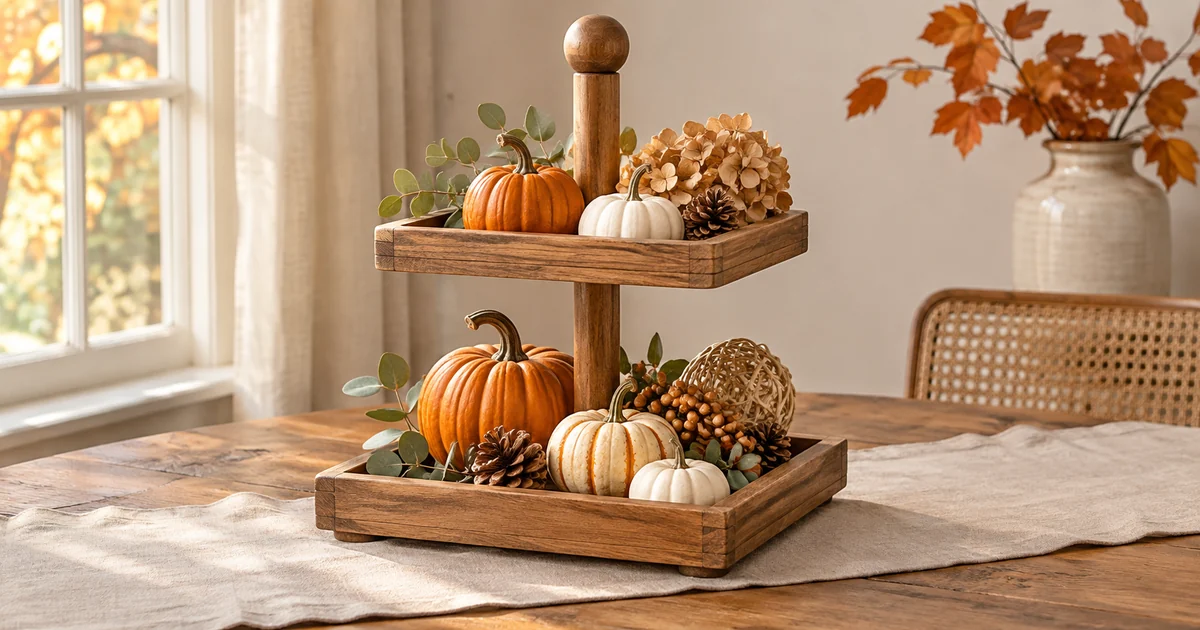
A square wood tiered tray stacks two (sometimes three) wooden trays on a central post, usually with a handle on top, for seasonal decor, coffee bars and dessert displays. The two numbers that decide what fits are the clearance between tiers (how tall an object can sit on the bottom tier) and the flat area of each tier. Check the overall height, whether the tiers are square or rectangular, how the post assembles, and whether the finish is meant for food.
Clearance and tier area
Listings usually give the overall height, not the space between tiers. To estimate clearance, subtract the top tier's thickness and rim, and the handle, from the height of the top tier's base above the bottom tier; or ask the seller. A tiered tray with about 7 to 8 inches between tiers takes most small decor pieces and mugs; anything taller belongs on the top tier or beside the stand.
| Measurement | Why it matters |
|---|---|
| Overall height | Shelves and sight lines |
| Clearance between tiers | Height of items on the bottom tier |
| Each tier's inner size | How much fits on each level |
| Post position | A central post splits each tier |
| Handle height | Clearance on the top tier |
Square wood tiered tray: what to check before buying
Seven checks
- Overall size and height.
- Clearance between tiers.
- Tier shape: square or rectangular; one listing titled square lists rectangular in its specs.
- Assembly: screw-together post, stable when loaded.
- Finish and stated use: decor or food.
- Handle: metal or wood, for moving the stand.
- Contents: most are sold as the tray only, without decor.
Square versus rectangular tiered trays
Square tiered trays look balanced from every side and suit round or square tables and kitchen islands. Rectangular tiered trays fit long counters and buffets and give more room for a row of items. If you are filling a corner of a counter, square is usually easier; if you want a coffee bar along a wall, rectangular works better.
Seasonal styling ideas
- Spring and Easter: small plants, eggs in a bowl, a sign on a mini easel.
- Fall: mini pumpkins, a candle in a jar, a small stack of books.
- Christmas: greenery, small ornaments, a gingerbread display on the top tier.
- Coffee bar: mugs on the bottom, sugar and spoons on top.
Keep the tallest item on the top tier and shorter items on the bottom where clearance is limited.
Using a tiered tray for food
Tiered trays are popular for cupcakes and cookies. Because many are painted or distressed decor finishes, put food on plates, doilies or liners on each tier unless the seller states food use. Check the post is tight before loading food, and keep heavier items on the bottom tier.
Researched selection: square tiered trays
Our recommended products are near the top of this guide. These Amazon searches help you compare more options.
Browse on Amazon
- Rectangular tiered traysBetter for long counters.
- Three-tier standsCheck clearance on each level.
These are Amazon search links, not endorsements of every result. Use the checks on this page to filter them.
Care
- Dust or wipe with a damp cloth; dry.
- Do not soak; disassemble to clean if needed.
- Tighten the post screw when it loosens.
- Use liners under food and plant saucers.
Making the most of each tier
A tiered tray reads from top to bottom, so put the tallest, lightest item on the top tier, often a small sign, a stem in a bud vase or a figurine, and the widest, heaviest items on the bottom tier. Repeat a color or material on both tiers so they look connected. Odd numbers of objects (three on the bottom, one or two on top) usually look more natural than pairs. Leave a little empty space; an overfilled tiered tray looks cluttered quickly.
Tiered tray for a coffee bar
A simple layout
- Bottom tier: two or three mugs, a jar of coffee pods or beans
- Top tier: sugar in a lidded jar, a small cup of stirrers
- Beside it: the coffee maker, not on the tray
- A small cloth or coaster under the sugar jar for spills
- Labels in a style that matches the tray
Assembly and stability
- Lay out the parts and check the post, screws and handle are all there.
- Screw the post into the bottom tier hand-tight, then attach the top tier and handle.
- Stand it on a flat surface and press gently on each tier's edge; it should not tilt.
- Retighten the post after a week, since wood settles.
- Keep heavy items low and centered; avoid loading the top tier with anything heavy.
Tiered trays for food
Cupcakes, cookies, tea sandwiches and fruit look good on tiered trays. Use paper doilies or small plates on decor finishes, and place the tray where people can reach the bottom tier without lifting the top. For outdoor events, choose a heavier tray or keep it out of the wind; tiered trays are tall for their footprint and can tip if bumped.
Common mistakes
| Mistake | Result | Fix |
|---|---|---|
| Not checking tier clearance | Items do not fit on the bottom tier | Ask for the space between tiers |
| Heavy items on top | Tray tips | Heavy and wide items go on the bottom |
| Loose post | Wobbling tiers | Retighten after assembly and occasionally |
| Overfilling | Cluttered look | Leave some empty space |
Before you buy: what to confirm in the listing
For a tiered tray, ask for the clearance between tiers as well as overall height, check each tier's size, and look at how the post assembles. Confirm whether decor in the photos is included; usually it is not. One tray we found was titled square but listed rectangular in its specifications, so check the photos.
Our take
Check clearance between tiers before buying, keep heavy items low, and tighten the post after assembly. A good tiered tray is an easy way to change a kitchen's look each season.
What affects the price
Tiered tray prices depend on size, materials and finish. Simple two-tier trays are modest purchases; larger trays with metal handles, solid wood tiers or decorative details cost more. Decor in photos is usually not included, so budget for that separately. A sturdy post and generous clearance between tiers are the features most worth paying for.
Three buyers, three tiered trays
The seasonal decorator. Someone who changes their kitchen island decor every season needs a tiered tray with generous clearance between tiers (so pumpkins, small vases and signs fit), a neutral finish that suits every holiday, and a post that comes apart for storage. A square two-tier tray of about 12 to 13 inches per tier works on most islands without crowding prep space.
The coffee bar builder. For a coffee corner, practicality matters more than looks. A tiered tray with a handle on top makes it easy to move the whole setup when wiping the counter. Mugs go on the bottom tier, sugar and spoons on top. A wipeable finish and felt feet protect the counter from coffee drips and scratches. A rectangular tiered tray can fit better along a wall if counter depth is limited.
The party dessert table. For cupcakes and cookies, look for flat tiers rather than deep trays, so treats sit at an easy height to reach, and place paper doilies or plates on each tier. Stability matters most here: guests reach in from all sides, so choose a tray with a wide bottom tier, keep heavier items low, and place it against a wall or at the back of a table rather than in a walkway where it can be bumped.
Square versus round tiered trays, in practice
Square tiered trays fit neatly into corners and along walls, and their straight sides make it easy to line up mugs, jars and signs. Round tiered trays have a softer look and suit round tables and the center of an island, where people approach from all sides. If your counter has a backsplash, a square tray pushed toward the wall uses space efficiently; if it sits in the open, a round one avoids sharp corners at hip height.
Weight and stability also differ. A square base covers more area than a round base of the same width, so square tiered trays can be slightly steadier for the same footprint. Either way, the bottom tier carries the weight of the whole display, so its construction matters most: a thick base, a well-fixed post and feet or felt pads under it.
Finally, consider storage. Many tiered trays unscrew into flat trays and a post, and both flat trays can be used on their own the rest of the year. A two-tier tray that comes apart effectively gives you two small trays and a seasonal display piece, which makes it easier to justify the space it takes up.
Tiered trays as gifts
A tiered tray makes a good housewarming or holiday gift because it suits almost any kitchen. Choose a neutral finish and include a few starter pieces: a small plant, a candle in a holder, a seasonal sign. Check the tray comes apart for storage, and include a note to tighten the post after a week.
Choosing a finish
Natural wood tiered trays suit every season; white or black painted ones suit farmhouse styling but show wear at edges. Distressed finishes hide small chips and marks well, which is useful for trays that get moved and restyled often.
How we researched this guide
Listing details, including a square-titled tray with rectangular specifications, come from Amazon titles and search snapshots in November 2026. Styling ideas are editorial. We have not tested any trays.
Decision summary
- Check clearance between tiers, not just overall height.
- Square for islands and corners; rectangular for long counters.
- Plates or liners for food on decor finishes.
Frequently asked questions
How tall is a two-tier tray?
Current listings run from about 16 to 21 inches overall.
What fits on the bottom tier?
Items shorter than the clearance between tiers, often around 7 to 8 inches.
Can I serve cupcakes on a tiered tray?
Yes, on liners or plates unless the seller states food use.
Do tiered trays come with decor?
Usually not. Most are sold as the tray only.
Why does my tiered tray wobble?
The post screw may be loose. Tighten it and keep heavy items low.
Square or round tiered tray?
Square looks tidy on islands; round suits round tables. Both work.
Can I take a tiered tray apart?
Most unscrew for storage. Check before buying.
Can I use a tiered tray outdoors?
For an event, yes, out of the wind. Bring it in afterward; moisture loosens joints and marks finishes.
How do I change a tiered tray for each season?
Keep a few base pieces (a candle, a small plant) and swap two or three seasonal items each time.
Can I hang decor from a tiered tray handle?
Light items like a small garland, yes. Avoid anything heavy at the top.
Are three-tier trays better than two?
They hold more but are taller and less stable. Two tiers suit most counters.
Can I use a tiered tray in a bathroom?
Yes, for soaps and small towels, away from direct splashes. Wipe it dry regularly.
Can I use a tiered tray for cupcakes?
Yes, on liners or plates, with the tray placed where it will not be bumped.
Do tiered trays come in round shapes?
Yes; round and square are both common.
How tall is too tall for a counter?
If it blocks cabinets or outlets above the counter, choose a shorter tray.
Can a tiered tray hold heavy items?
Keep heavy items on the bottom tier and light ones on top. Most tiered trays are designed for decor rather than weight.
Do tiered trays need assembly?
Most need the post screwed to each tier, which takes a few minutes.
Can tiered trays hold plants?
Small plants on saucers work well, with heavier pots on the bottom tier. Keep water off the wood and check the post stays tight.
Where should a tiered tray go?
Against a wall or at the back of a counter, where it will not be bumped and the bottom tier is easy to reach.
Sources and further reading
- USDA FSIS: Cutting boards and food safety (fsis.usda.gov)